Tuesday, April 2, 2013

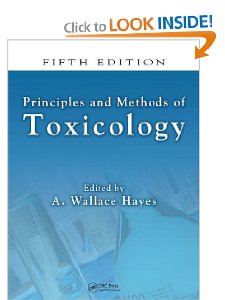
Principles and Methods of Toxicology, Fifth Edition


Principles and Methods of Toxicology, Fifth Edition by A. Wallace Hayes (Editor). Based on the paradox that all things are poisons and the difference between poison and treatment is amount, the dedication of safe dosage types the base and focus of contemporary toxicology. In an effort to make a sound dedication there must be a working information of the biologic mechanisms involved and of the strategies employed to define these mechanisms. Whereas the vastness of the field and the fast accumulation of information might preclude the opportunity of absorbing and retaining more than a fraction of the obtainable info, a solid understanding of the underlying ideas is essential.

Extensively revised and updated with four new chapters and an expanded glossary, this fifth version of the basic textual content, Principles and Strategies of Toxicology offers comprehensive protection in a manageable and accessible format. New subjects include ‘toxicopanomics’, plant and animal poisons, data assets, and non-animal testing alternatives. Emphasizing the cornerstones of toxicology-people differ, dose issues, and things change, the guide begins with a review of the historical past of toxicology and adopted by an explanation of primary toxicological rules, agents that trigger toxicity, goal organ toxicity, and toxicological testing strategies including lots of the test protocols required to meet regulatory wants worldwide. The guide examines every technique or process from the standpoint of technique and interpretation of information and discusses issues and pitfalls that could be related to each. The addition of several new authors allow for a broader and more diverse therapy of the ever-changing and expanding discipline of toxicology.

Sustaining the high-high quality information and organizational framework that made the earlier editions so successful, Rules and Methods of Toxicology, Fifth Edition continues to be a valuable resource for the superior practitioner as well as the brand new disciple of toxicology.

Monday, April 1, 2013

The World According to Monsanto: Pollution, Corruption, and the Control of the World’s Food Supply


The World According to Monsanto: Pollution, Corruption, and the Control of the World’s Food Supply by Marie-Monique Robin (Author). The results of a outstanding three-year-long investigation that took award-winning journalist and documentary filmmaker Marie-Monique Robin throughout 4 continents (North and South America, Europe, and Asia), The World In response to Monsanto tells the little-recognized but surprising story of this agribusiness large–the world’s main producer of GMOs (genetically modified organisms) –and the way its new “green” face is no much less malign than its PCB- and Agent Orange-soaked past.

Robin studies that, following its long history of producing hazardous chemicals and deadly herbicides, Monsanto is now marketing itself as a “life sciences” company, seemingly convinced concerning the virtues of sustainable development. However, Monsanto now controls nearly all of the yield of the world’s genetically modified corn and soy–components discovered in additional than ninety five p.c of American households–and its alarming legal and political tactics to maintain this monopoly are the topic of worldwide concern.

Released to great acclaim and controversy in France, throughout Europe, and in Latin America alongside the documentary movie of the identical name, The World Based on Monsanto is sure to alter the way in which we think about meals safety and the corporate control of our meals supply.

Counter-Terrorism for Emergency Responders, Second Edition


Counter-Terrorism for Emergency Responders, Second Edition by Robert Burke (Author). Terrorism is no longer one thing that only occurs to different countries. Attacks on US soil within the 1990’s introduced the fact of terrorism dwelling and the Sept 11th tragedy let us know that the United States is a high priority target. The purpose of in the present day’s terrorist is body count, and while conventional bombings have served them up to now, the allure of killing hundreds of individuals with a really small quantity of organic or chemical agent will prove irresistible. Our solely protection on the front line is a properly-prepared emergency response team.

The key to an efficient terrorist response is to know and comprise the hazardous materials involved. Counter-Terrorism for Emergency Responders, Second Version meticulously particulars the traits, actions, identification, containment, and emergency remedy of all sorts of agents. Drastically up to date from the 1999 edition, chapter after chapter is full of new information on chemical agents, organic brokers, and explosive, nuclear, and incendiary devices.

Using his 26 years of experience in emergency providers and his expertise as a hazardous supplies consultant in more than 15 states, the creator prepares the first responder to handle every little thing from re-establishing management and on-scene triage to investigating the crime. Including data on pre-incident and avoidance ways, the author provides new monitoring and detection techniques, protecting gear and decontamination, and an intensive record of resource organizations and coaching opportunities. The worst might never happen to your group, but will you be prepared if it does?

Bird Census Techniques, Second Edition


Bird Census Techniques, Second Edition by Colin J. Bibby (Author), Neil D. Burgess (Author), David A. Hill (Author), Simon Mustoe (Author). On this guide there are entire chapters dedicated to essentially the most extensively used bird counting methods, and makes an attempt to amalgamate different counting methodologies into major teams had been made. Examples of using methods are supplied wherever potential and the relative worth of varied approaches for answering specific questions can also be addressed.

Key Options
* A newly revised version of the immensely profitable Bird Census Strategies
* A wholly new chapter protecting the census strategies beneficial for tropical habitats
* Offers a concise guide to various census strategies and their opportunities and pitfalls

This is an especially helpful information to anyone thinking about doing a severe chicken count. I myself have counted birds on many habitats and for many reasons, and I had to evaluation a large number of papers before adopting a counting method. Now, with this book in hand, all important strategies of counting birds, whether within the tropics or temperate areas, are inside minutes reach! I discovered this title extremely helpful for my chook census studies. It is a highly sensible work. I recommend it for anybody who counts birds, whether or not for serious scientific work or just as a simple hobby.

Hydrology and the Management of Watersheds


Hydrology and the Management of Watersheds by Kenneth N. Brooks (Author), Peter F. Ffolliott (Author), Hans M. Gregersen (Author), Leonard F. DeBano (Author). This new third edition is a major revision of the sooner two editions and is based largely on the feedback the authors received from previous users of the e-book within the classroom.

Modifications in this expanded and utterly up to date new version embody:

- Expanded dialogue of stream channel processes, morphology, and classification;
- A brand new Half Three incorporates a chapter on fundamental water high quality and a new chapter on water high quality administration;
- The topics of riparian and wetland hydrology and management have been expanded into two new chapters;
- A brand new section on Particular Matters consists of matters that shall be of interest to managers and are supposed to complement the sooner parts of the ebook;
- Chapter One Hydrologic Strategies remains as a highly technical chapter that can be utilized to quantify some of the hydrologic relationships discussed in earlier chapters;
- Chapter Eighteen presents tools for evaluation and analysis in watershed administration;
- A brand new Half Six is comprised on a single, comprehensive chapter that condenses and updates material from three chapters in the previous edition that focused on socioeconomic considerations.

The Earth Moved: On the Remarkable Achievements of Earthworms


The Earth Moved: On the Remarkable Achievements of Earthworms by Amy Stewart (Author). In The Earth Moved, Amy Stewart takes us on a journey via the underground world and introduces us to one in every of its most amazing Denizens. The earthworm may be small, spineless, and blind, but its impression on the ecosystem is profound. It ploughs the soil, fights plant illnesses, cleans up pollution, and turns abnormal filth into fertile land. Who knew?

In her witty, offbeat fashion, Stewart reveals that much is dependent upon the actions of the lowly worm. Charles Darwin devoted his final years to the meticulous study of those creatures, praising their remarkable abilities. With the august scientist as her inspiration, Stewart investigates the worm’s subterranean realm, talks to oligochaetologists-the unsung heroes of earthworm science-who’ve devoted their lives to unearthing the complicated life beneath our toes, and observes the hundreds of worms in her own garden. From the legendary large Australian worm that stretches to 10 feet in length to the modest nightcrawler that wormed its manner into the heart of Darwin’s final e book to the energetic purple wigglers in Stewart’s compost bin, The Earth Moved gives worms their due and exposes their hidden and extraordinary universe. This guide is for all of us who recognize Mother Nature’s creatures, irrespective of how humble.

Edible Ectomycorrhizal Mushrooms: Current Knowledge and Future Prospects (Soil Biology)


Edible Ectomycorrhizal Mushrooms: Current Knowledge and Future Prospects (Soil Biology) by Alessandra Zambonelli (Editor), Gregory M Bonito (Editor). Edible ectomycorrhizal mushrooms (EEMMs) comprise more than a thousand species and are an essential meals and forest resource. On this quantity of Soil Biology, internationally recognized scientists supply their most recent analysis findings on these beguiling fungi. Topics covered include: complicated ecological interactions between crops, EEMMs, and soil organisms; comparative genomics, excessive-throughput sequencing and trendy research instruments; genetic collection of fungal strains and strategies for inoculating vegetation; economic and social issues surrounding wild collected EEMMs; and practical information concerning soil management and EEMM cultivation. The e-book might be a useful information for anybody keen on soil ecology, forestry, or the genetics and cultivation of EEMMs, and supplies an intensive knowledge base and inspirations for future research on these ecologically and economically vital fungi.